How to Diversify Product Offerings Beyond Typical Gifts for Sustainable Growth
The seasonal gift market is wonderful—it’s heartwarming, profitable, and involves wrapping paper in abundance. However, relying solely on the holiday rush or predictable gifting cycles can feel like building a beautiful house on sand. One year, you're basking in the glow of successful festive sales; the next, the lull feels deafeningly quiet. If your business strategy currently revolves around being merely "the gift shop," it’s time to think bigger than bow and ribbon. Diversification isn't just about adding more product lines; it’s about establishing a robust, multi-faceted ecosystem that can withstand seasonal downturns and capture new market segments. This guide will help you understand the strategic mindset required for lasting growth and answer the critical question: how to diversify product offerings beyond typical gifts.
Understanding the Limits of Product Concentration
Before you can expand your portfolio, you must first clearly define its boundaries. Many businesses fall into a trap where their core identity—and thus their revenue stream—is too tightly coupled to one type of transaction (like gifting). This concentration creates both deep expertise and significant vulnerability. Are you truly selling products, or are you selling occasions? The distinction is key to unlocking your next phase of growth.
Analyzing Current Limitations
Often, the limitation isn't the product itself, but the perceived use case. If every item in your catalog is marketed purely as a gift, potential customers might subconsciously pigeonhole your brand. They may think, "Oh, this is only for birthdays," when it could actually be an essential part of a daily routine.
A great way to break out of this mindset is to conduct a simple "Non-Gift Use Case Audit." Take ten popular items and list five ways they could be used without being given to another person. This exercise forces you to pivot your marketing language from emotional gifting to practical utility, immediately broadening your appeal.
The Opportunity Cost of Status Quo
Remaining comfortable is often the most expensive choice a business can make. By focusing solely on optimizing gift sales, you are accepting an opportunity cost—the value of all the potential revenue and market share you aren't capturing. As the renowned author Peter Drucker once noted, "The best way to predict the future is to invent it." Your current success should be viewed not as a destination, but as a launchpad for innovation.
Strategic Pillars for Product Expansion
Moving beyond simple inventory additions requires a strategic shift in thinking. We must move from being product-focused to becoming solution-focused. This means identifying the actual problem your customer has and then building products that solve it, regardless of whether those solutions are "giftable." When considering how to diversify product offerings beyond typical gifts, think about solving pain points, not celebrating milestones.
Vertical Integration vs. Horizontal Expansion
These two concepts represent different paths on your diversification journey:
- Vertical Integration: This means moving along the supply chain of your existing products. If you sell beautiful artisanal tea blends (your core product), vertical integration might involve starting to sell specialized teaware, brewing equipment, or even curated subscription boxes that include niche accessories. You are deepening the customer relationship within a single functional area.
- Horizontal Expansion: This means moving into entirely new markets or product categories that share some common DNA but serve different purposes. If you specialize in natural bath products, horizontal expansion might lead you to develop line of soaps for complementary areas, such as specialized beard care kits or laundry additives—products the customer wasn't expecting from a "gift shop."
Leveraging Core Competencies for New Lines
What is your business genuinely excellent at? Is it sourcing rare materials? Is it exceptional branding and storytelling? Or perhaps it’s its ability to curate high-quality, niche items? Your core competency should be the engine for diversification. Don't just look at what you sell; look at how you make or source it.
For example, if your competency is "curating sustainable goods," then developing a line of useful, long-lasting home maintenance products (like natural cleaners or beeswax polish) is a logical step that retains your brand's ethos while solving practical household needs.
Testing the Waters: Minimizing Risk in Diversification
The fear associated with expansion is failure. We all love success stories, but few enjoy the messy reality of product development. The good news is that modern business offers incredible tools for mitigating risk before you commit massive capital.
Pilot Programs and Minimum Viable Products (MVPs)
Never launch a completely new, expensive line to your entire customer base overnight. Start small. Adopt the philosophy of the Minimum Viable Product (MVP): create the most stripped-down version of your new offering that still allows you to test its core value proposition in the real world.
- Run pop-up shops focused solely on the new category.
- Use an online pre-order model for limited batches.
- Consider a partnership with another complementary local business to co-launch and share risk.
Market Validation Beyond Assumptions
The biggest danger is assuming that because you think people need your new product, they actually do. To truly understand how to diversify product offerings beyond typical gifts, you must talk to actual customers. Instead of showing them the finished product, present a problem scenario: "Imagine this specific routine..." or "What if your kitchen needed something that did X and Y?" Their Visit this website genuine pain points will guide you far better than any brainstorming session in your boardroom.
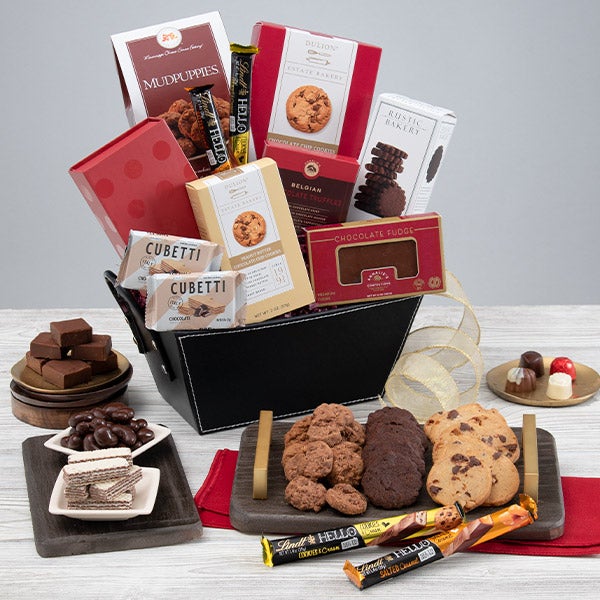
Anecdotally, I once worked with a small gourmet food company specializing only in gift baskets. They were hesitant to branch out into staple pantry goods. We didn't force it; we simply hosted a workshop about "meal planning for busy families." By focusing on the problem (time/nutrition) rather than the gift (baskets), they realized their expertise was actually in high-quality, shelf-stable ingredients—a perfect pivot into daily staples.
Crafting Your Sustainable Portfolio Future
Diversification is not a one-time project; it's an ongoing commitment to curiosity and adaptation. It means viewing your entire product line as a river, always flowing toward new tributaries of opportunity. If you treat your business like a stagnant pond, you will eventually run out of oxygen—and revenue.
Consider the quote: "The greatest danger in times of turbulence is not the turbulence; it is to act with yesterday’s logic." Your market is constantly changing, and relying on past success guarantees nothing but inertia. By strategically expanding your product offerings—by solving real, non-gifting related problems—you transform your brand from a seasonal attraction into an indispensable fixture in your community's life.
What area of your current expertise feels the most underutilized? Perhaps it’s not another beautiful candle; maybe it's the specialized knowledge that comes with choosing the perfect wick size for different types of wax. Focus on that underlying skill, and let the product suggestions flow naturally. Start small, test aggressively, and always remember that true growth is built not from stacked gifts, but from foundational utility.
